 John Wessel
The fast side and the slow side
I'm amazed at how quickly things are changing across the SaaS landscape and in social. On the quick side, the rate of model improvement is crazy. The model lead changes between companies like OpenAI and Anthropic are wild, and Google is back in the mix. I think Grok will be in the mix for top models pretty soon.
On the other end of the spectrum, it's amazing how little has truly changed for the majority of companies in the tools they use every day. Most have just added ChatGPT or Codex, or added Claude, and pretty much everything else remains the same. There are definitely some tech companies rebuilding Salesforce or other tools internally that they used to pay for, but I think they're still the exceptions. That part is moving slower than many predicted.
More disruption is coming
I expect continued disruption and consolidation over the next several years. SaaS companies will buy each other, some will fold, and new SaaS companies will emerge that are better optimized for 2026 versus 2010, when some of these big players formed.
What I mean by data strategy
Assuming this volatility, having a good data strategy is a huge deal. By "data strategy," I mean having a plan for how data collection works in your organization. I'm primarily speaking to marketing and sales people, but this applies to anyone. How are you collecting important data? How are you collecting and storing customer data, sales and order data, and marketing leads?
It seems obvious, but a lot of this is handled by tools like HubSpot, Salesforce, or your MarTech stack. That's fine. But if a year from now, or even a month from now for some, you switch how you work and want agents to drive part of your stack, what then?
Where adding agents breaks down
Most people start by adding agents to their existing stack, hooking up MCP servers, APIs, or whatever they use to access data. Many find a few cool use cases and get real value from efficiency or new capabilities. That's awesome, but here's where things break down.
Imagine you decide to move off HubSpot because you don't need most of its features and found or created a better tool. Or you switch from Claude to Codex, or from Codex to Claude. Or you finally get off your legacy ERP from 20 years ago because AI can assist in the migration. These transitions will be disruptive, even with AI help.
The best hedge is a data warehouse
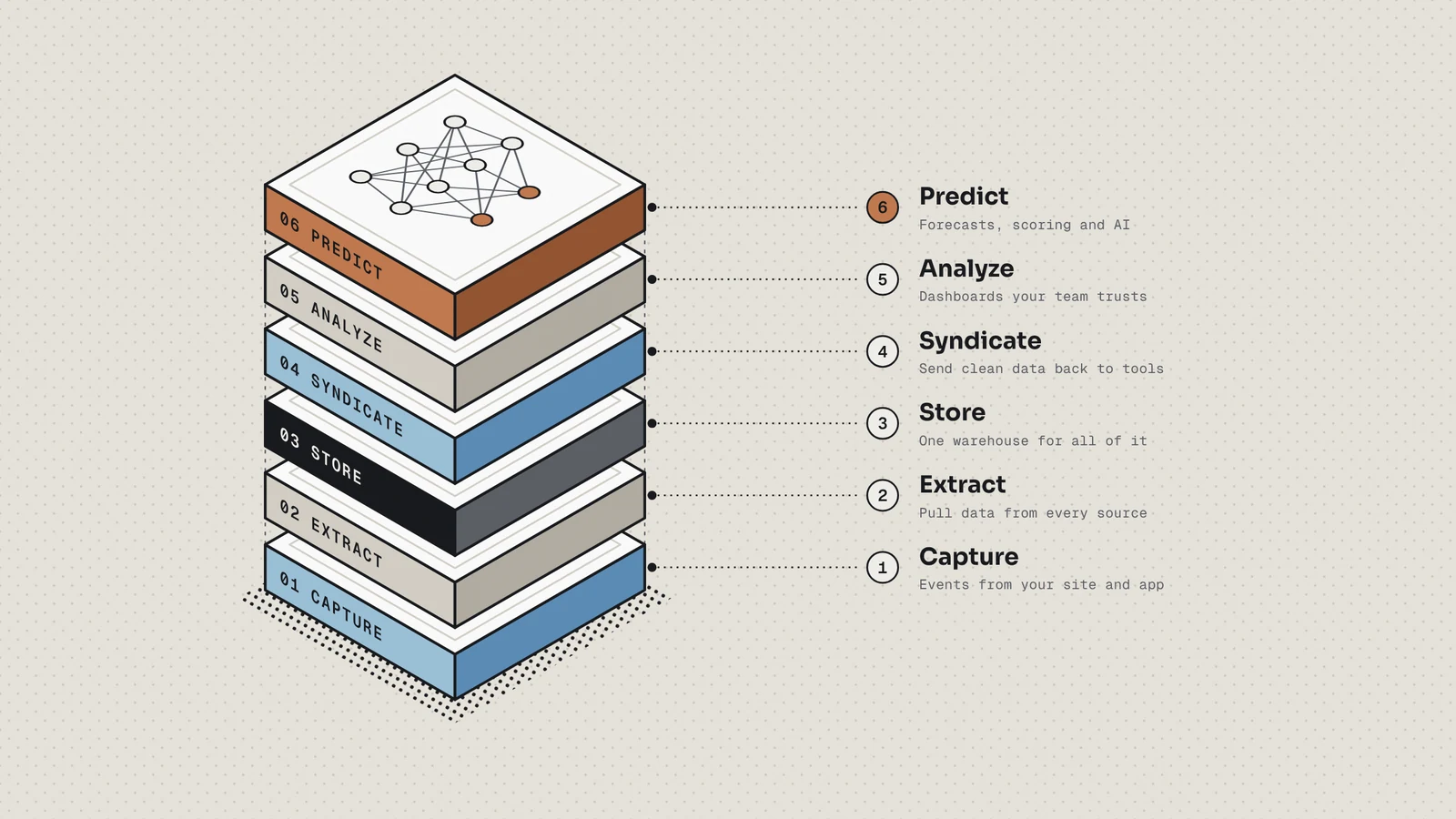
In my opinion, the best hedge against this is a centralized way to manage your data, specifically a data warehouse.
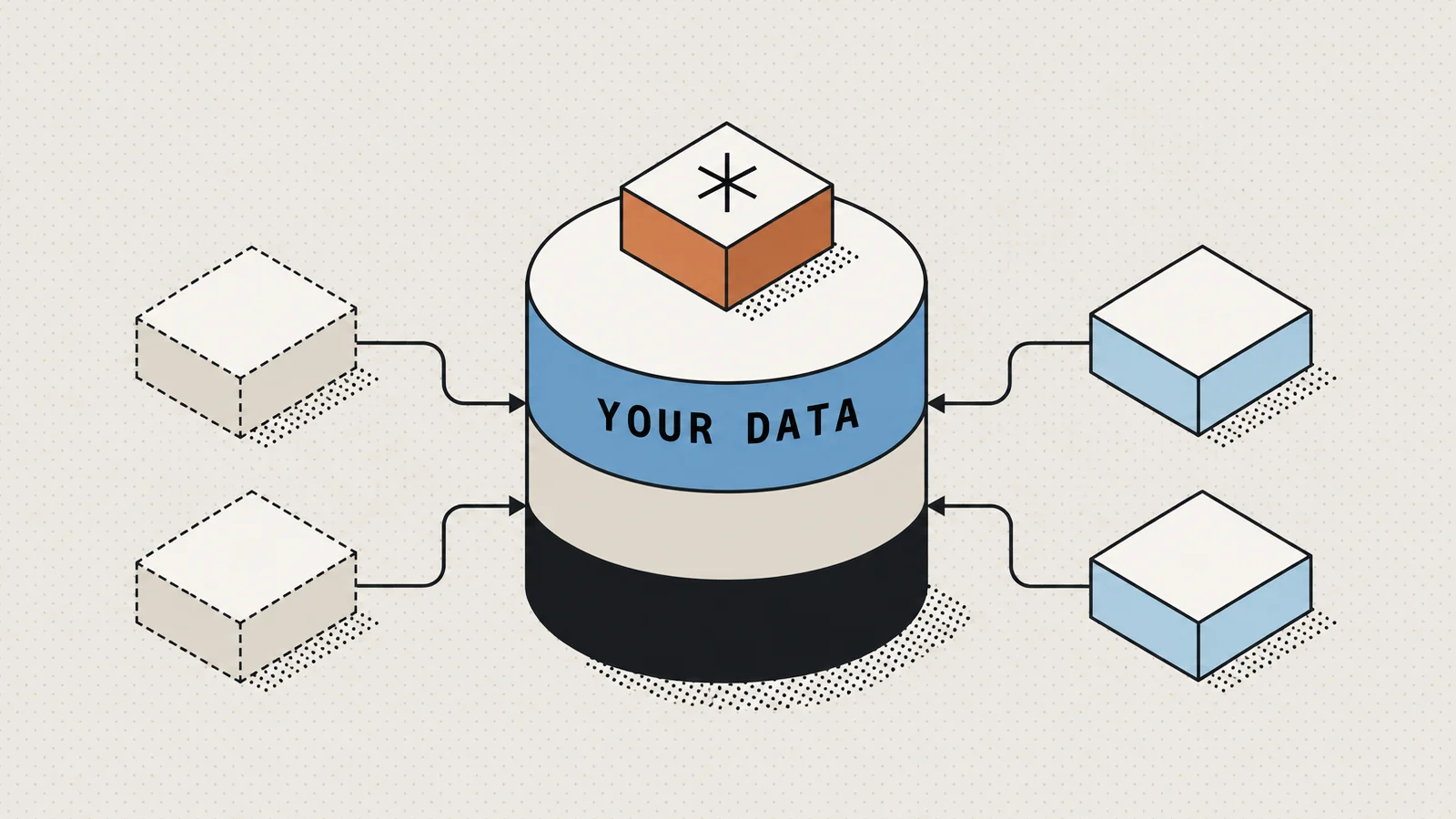
For example, if you move off your ERP, you still have a database with everything from the past two decades, and you can overlay your new ERP data with your old data. If you replace half your MarTech stack or switch AI tools, you can have data from both the old and new tools in one place, for analytics and reporting across both.
Central data for agents
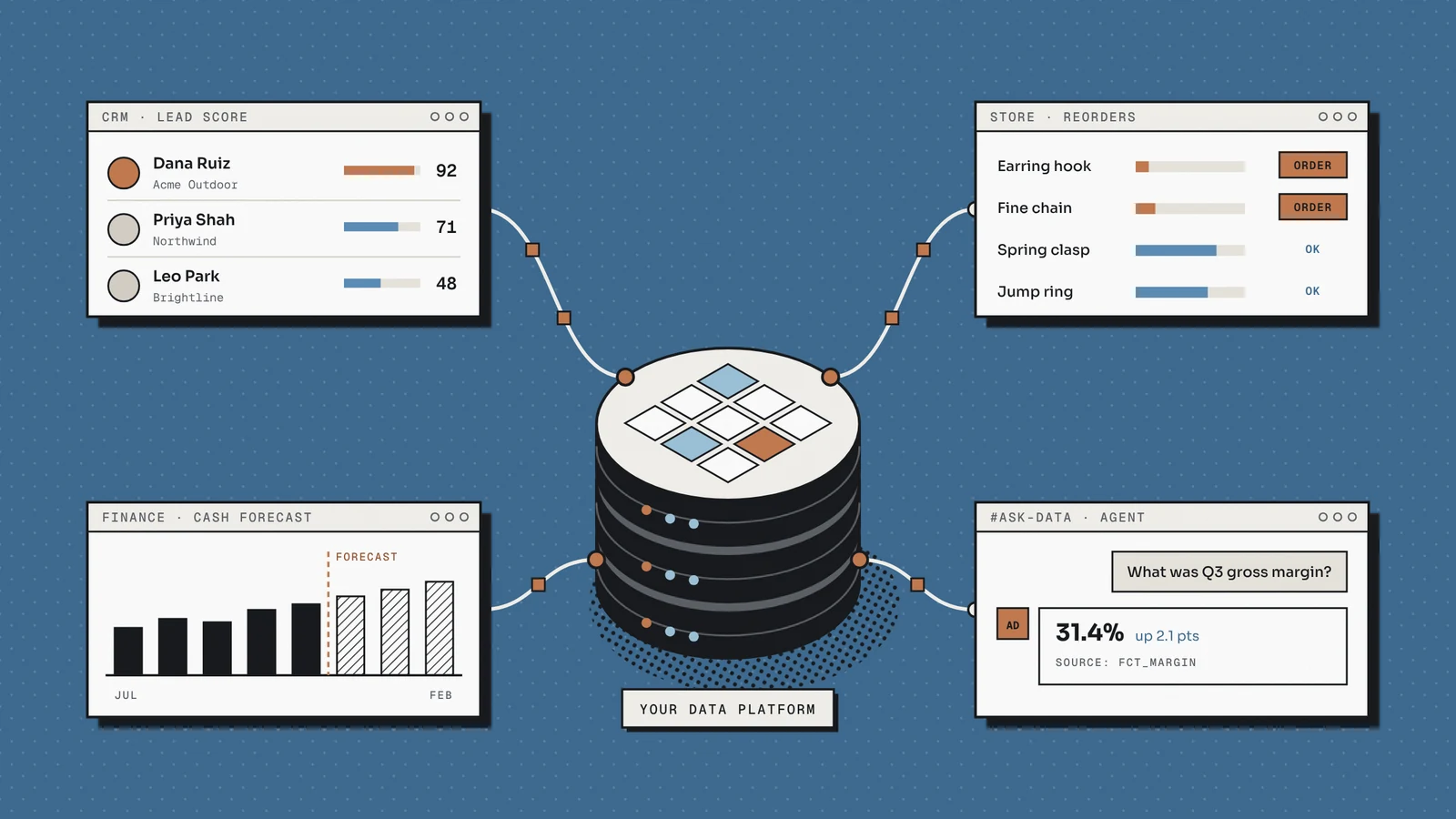
More and more people will use this in everyday operational workflows with agents. If you need ad revenue, marketing email responses, or social platform engagements to make marketing decisions, it's more cost-efficient and easier to manage long-term if you store that data centrally and connect it to an AI agent, rather than making API or MCP calls every time you need this information. The agent can help decide which campaign to run next or how to manage campaign budgets. It's just a marketing example, but you get the picture.
The alternative
There's a lot that opens up if you manage data this way, versus getting locked into one big ecosystem.
Skip the constant migrations, with half your data in one system and half in another and agents connected to a million different APIs. Otherwise you'll spend tons of LLM credits AND end up with a duct-tape solution that won't scale.
Build your company on a centralized data store. You'll thank yourself later!